
 EN
EN
 AR
AR
 BG
BG
 HR
HR
 CS
CS
 DA
DA
 NL
NL
 FI
FI
 FR
FR
 DE
DE
 EL
EL
 HI
HI
 IT
IT
 JA
JA
 KO
KO
 PL
PL
 PT
PT
 RO
RO
 RU
RU
 ES
ES
 SV
SV
 ID
ID
 UK
UK
 ET
ET
 GL
GL
 HU
HU
 MT
MT
 TR
TR
 FA
FA
 AF
AF
 GA
GA
 HY
HY
 AZ
AZ
 KA
KA
 UR
UR
 BN
BN
 LA
LA
 UZ
UZ
 KU
KU
 KY
KY
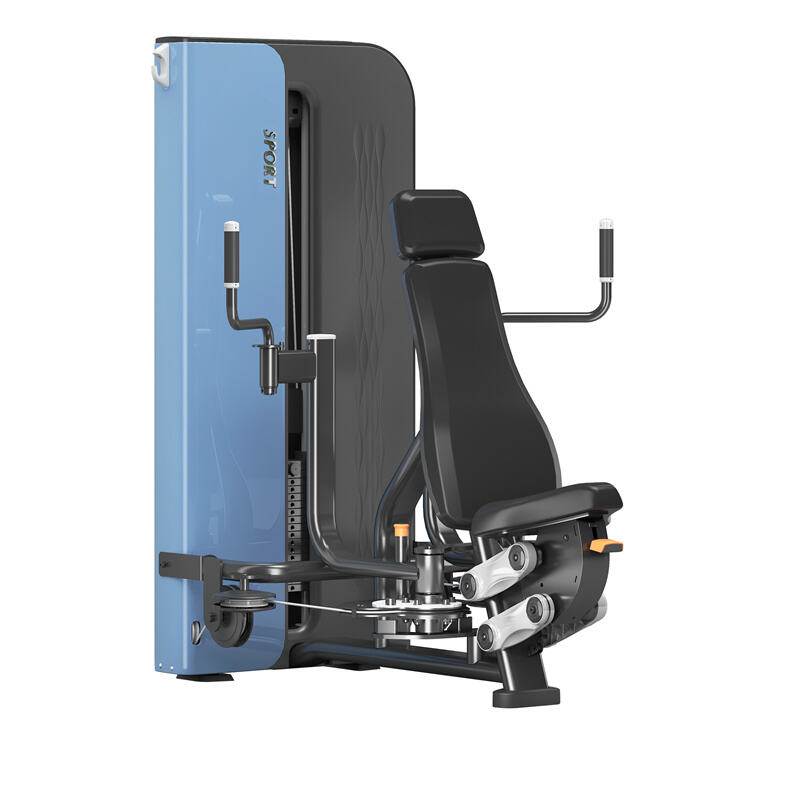
Understanding the Butterfly Machine: Definition and Core Function
Defining the Butterfly Machine in Industrial Applications
The butterfly valve, sometimes called a butterfly machine, serves as an essential component in many industrial systems where controlling liquid and gas flows is necessary. The core part of this device is basically a disc (often referred to simply as the butterfly) attached to a central rod. When someone rotates this disc 90 degrees, it either lets material pass through or stops it entirely. In its open position, the disc lines up with whatever needs to move through, creating minimal resistance. When shut off, though, nothing gets past because the disc sits right across the pipe. What makes these valves so popular among plant operators? They work fast enough for situations where large volumes need regulation, which explains why they show up frequently in places like wastewater plants and chemical manufacturing facilities. Looking at alternatives like gate or globe valves, butterfly machines generally create less resistance against flowing materials and tend to consume less energy overall, yet still manage to keep control over what goes through them pretty reliably most of the time.
The Role of the Butterfly Machine in Flow Control Systems
Butterfly valves work really well for both stopping flow completely and controlling it partially in pipelines. The way they're designed with a flat disc helps cut down on turbulence when the valve isn't fully open, so operators get better control without needing complicated mechanisms to make it happen. These characteristics make butterfly valves particularly good fits for places like oil refineries where pressure spikes can wreck expensive equipment. When installed with ANSI Class 150 or 300 ratings, they handle these harsh conditions much better. For steam systems that experience lots of temperature changes, manufacturers often choose resilient seating materials like EPDM rubber or PTFE plastic. These materials maintain their seal integrity even when heated and cooled repeatedly, which means less downtime and fewer maintenance headaches over time.
How the Term 'Butterfly Machine' Relates to Valve Technology
People tend to use the terms "butterfly valve" and "butterfly machine" interchangeably, but there's actually something different about what the latter refers to. The term "butterfly machine" really points to how these valves get integrated with sophisticated actuation systems, turning simple valves into smart flow controllers that can do much more than just open and close. When we talk about gear operators or those automated actuators, they basically take either manual inputs from someone working on site or electronic signals coming through control systems, and then translate those into exact movements of the disc inside the valve. This makes it possible for operators to control these machines remotely across entire industrial facilities. What makes this development so important is that it aligns with Industry 4.0 requirements. Think about it this way: modern butterfly machines come equipped with IoT capabilities, allowing them to make adjustments automatically based on live data collected by sensors built right into the system. These sensors keep track of everything from pressure levels to fluid viscosity and even temperature changes happening within the pipeline network.
How a Butterfly Machine Works: The Principle of Valve Dynamics
Rotational Disc Mechanism: Butterfly Valve Working Principle
Butterfly machines work mainly because of a disc sitting right in the middle that turns about 90 degrees thanks to a stem attached to some kind of actuator device. When this thing is open, the disc lines up with where the fluid is moving, so there's not much resistance at all. What's interesting is that even when completely open, the disc stays inside the actual flow path. This means we usually see around a 10 to maybe 20 percent drop in pressure throughout most setups. Ball valves don't do this since their design keeps them out of the way when open. The fact that butterfly discs stay put does create minor hydraulic effects, but it makes these valves really easy to operate with just a quick quarter turn motion, which saves time during maintenance or adjustments.
Operation from Open to Closed Position: Precision in Flow Regulation
The way flow gets modulated really hinges on where the disc sits angle-wise. When the angle is pretty shallow like around 10 degrees, things get all turbulent and restricted. But crank it up to about 70 degrees and suddenly we're looking at near maximum capacity. This kind of proportional control lets operators tweak those flow rates pretty precisely within about plus or minus 2%. That level of accuracy makes a big difference for applications in water treatment plants and HVAC systems where small changes matter a lot. These days many newer models come equipped with positional feedback sensors too, which helps keep everything running smoothly even after thousands upon thousands of operation cycles without losing that consistency.
Sealing Efficiency and Pressure Drop During Operation
Sealing effectiveness is determined by seat material and disc configuration:
- Elastomer seats (EPDM, Viton) provide bubble-tight closure up to 150 PSI
-
Metal-seated designs endure pressures exceeding 1,000 PSI but require exact alignment
Eccentric disc models—particularly double- and triple-offset types—reduce operating torque and pressure loss by up to 15% compared to concentric versions, improving energy efficiency in high-performance systems (Ponemon 2023).
Real-Time Response Characteristics of the Butterfly Machine
Advanced butterfly machines respond to control inputs in under 500 milliseconds, outperforming globe valves by a factor of three in emergency shutoff scenarios. Smart actuators with IoT integration analyze real-time flow velocity and viscosity data to make predictive adjustments, reducing maintenance downtime by 40% in oil pipeline operations.
Key Components of a Butterfly Machine and Their Functions
Structural Breakdown: Disc, Stem, Seat, and Body Components
Butterfly valves rely on four main parts to control flow effectively. At the heart of it all sits the disc, which spins across the pipe at a right angle to either let stuff through or block it completely. Connected to this disc is a sturdy stainless steel rod that connects everything to the actuator mechanism. This setup transfers rotational force pretty smoothly without much resistance along the way. For sealing when closed, manufacturers often use resilient seat materials like EPDM rubber or PTFE plastic, creating tight closures that prevent leaks even under pressure. The outer shell of these valves comes in different metals too - most commonly ductile iron for general use cases or stainless steel where corrosion resistance matters. These bodies need to hold up over time and fit standard connection sizes specified in industry standards like ANSI B16.5.
Disc Design Variations and Performance Impact
Disc geometry significantly influences performance. Concentric discs suit low-pressure, cost-sensitive applications, while double- and triple-offset designs reduce wear and improve sealing in high-cycle or high-pressure systems. Eccentric configurations decrease required operating torque by 20—35%, according to fluid dynamics simulations, enhancing longevity and reducing actuator strain.
Stem Configuration and Torque Transmission
Stems come in one-piece or splined designs to balance strength and serviceability. Stainless steel shafts paired with bronze bearings minimize friction, which is crucial for fast-response systems. Proper alignment prevents galling in high-temperature environments, ensuring smooth operation and extended component life.
Seat Materials and Temperature Resistance in High-Pressure Systems
Seat selection dictates operational limits:
- EPDM seats perform reliably up to 120°C in water treatment
- Reinforced PTFE resists temperatures up to 180°C and handles corrosive fluids
- Metal-to-metal seals operate safely at temperatures reaching 425°C, making them ideal for thermal power plants
Body Types and Connection Standards for Industrial Compatibility
Butterfly machines are available with lug-style, wafer-style, or flanged bodies to match diverse piping requirements. Compliance with ANSI B16.5 and ISO 5211 ensures broad interoperability across industries. Wafer-style models offer space savings of up to 40% compared to traditional flanged valves, facilitating compact installations in constrained environments.
Actuation Methods: Manual vs. Automated Control in Butterfly Machines
Manual Actuation: Lever Handle and Gear Operator Simplicity
Butterfly valves operated manually rely on simple lever handles or gear mechanisms that let people control them directly, which means they work fine even when there's no electricity around. The lever system allows for those fast quarter turns needed to shut off flow in smaller pipes below 12 inches diameter something really handy during emergencies when every second counts. For bigger installations where more force is necessary, gear operators come into play. These actually boost the torque someone applies by about 40 percent according to Fluid Systems Journal from last year, making them indispensable for handling large valves that might need as much as 1,200 Newton meters of force.
Mechanical Gear Systems: Enhancing Torque for Large-Scale Applications
Gear-driven mechanisms use worm or planetary gears to deliver mechanical advantage, reducing operator effort by 65—80% compared to direct levers. These systems support pipeline pressures up to 250 PSI in municipal water distribution, ensuring safe and manageable operation of large-diameter valves.
Lever Handle vs. Gear Operator: Efficiency Comparison
- Response Time: Lever handles actuate 3x faster, favoring emergency scenarios
- Torque Range: Gear systems accommodate 10x more force (50—1,200 Nm vs. 5—120 Nm)
- Maintenance Frequency: Gearboxes need lubrication every 5,000 cycles; levers require none
Automated Actuators: Pneumatic, Electric, and Smart Controls
Modern butterfly machines increasingly integrate pneumatic actuators for hazardous areas and electric actuators for precision modulation with ±2% accuracy. Automated actuators support smart control protocols, enabling IoT-based predictive maintenance that reduces unplanned outages by 37% in refinery operations through continuous torque monitoring.
Industrial Applications and Future Innovations in Butterfly Machine Technology
Butterfly machines serve critical roles across industries while evolving through smart technology integration. Their balance of reliability and adaptability positions them as foundational components in modern fluid control systems.
Performance in Water Treatment: Reliable Flow Regulation
Municipal water systems depend on butterfly valves for flow management in pumping stations and filtration units. Their rapid shutoff capability reduces water hammer risks by 63% compared to gate valves (Ponemon 2023), improving system safety during process interruptions involving chemical dosing or sludge transfer.
Oil and Gas Pipelines: High-Pressure Tolerance and Safety
Double-offset butterfly valves handle pressures over 1,480 psi in hydrocarbon transport. According to a 2024 Industrial Valve Performance Report, they achieve a 99.2% leak prevention rate in gas processing due to robust metal-seated designs that remain effective across extreme temperatures from -320°F to 1,200°F.
HVAC Systems: Energy Efficiency with Automated Butterfly Machines
In building automation, actuated butterfly valves optimize chilled water distribution, cutting HVAC energy use by 18—22% annually. Their compact footprint allows installation in tight spaces like air handling units, while maintaining ±2% temperature control precision.
Smart Actuators and IoT Integration in Modern Butterfly Machines
Wireless smart actuators deliver real-time valve position and torque data via industrial IoT platforms. These systems empower predictive analytics to detect bearing wear up to 47 days before failure, as demonstrated in the 2024 Fluid Control Innovations Study.
Predictive Maintenance Through Sensor-Equipped Butterfly Valves
Integrated vibration and acoustic sensors monitor stem friction levels and generate alerts when deviations occur. This shift from time-based to condition-based maintenance slashes unplanned downtime by 73% in continuous-process facilities, increasing overall system reliability.
FAQ Section
What is a butterfly machine used for?
A butterfly machine, often referred to as a butterfly valve, is used in industrial systems to control the flow of liquids and gases.
How does a butterfly valve work?
A butterfly valve works by rotating a disc attached to a rod, either allowing materials to pass through when open or blocking them when closed.
What materials are used for butterfly valve seals?
Common materials for butterfly valve seals include elastomers like EPDM and Viton, as well as metals for high-pressure scenarios.
What are the benefits of using a butterfly valve?
Butterfly valves offer quick operation, reduced resistance, energy efficiency, and reliable control in various industrial applications.
What is the difference between manual and automated butterfly valves?
Manual butterfly valves use levers or gear operators for actuation, whereas automated valves integrate pneumatic or electric actuators for precision control and smart capabilities.
Table of Contents
- Understanding the Butterfly Machine: Definition and Core Function
- How a Butterfly Machine Works: The Principle of Valve Dynamics
- Key Components of a Butterfly Machine and Their Functions
- Actuation Methods: Manual vs. Automated Control in Butterfly Machines
-
Industrial Applications and Future Innovations in Butterfly Machine Technology
- Performance in Water Treatment: Reliable Flow Regulation
- Oil and Gas Pipelines: High-Pressure Tolerance and Safety
- HVAC Systems: Energy Efficiency with Automated Butterfly Machines
- Smart Actuators and IoT Integration in Modern Butterfly Machines
- Predictive Maintenance Through Sensor-Equipped Butterfly Valves
- FAQ Section