
 EN
EN
 AR
AR
 BG
BG
 HR
HR
 CS
CS
 DA
DA
 NL
NL
 FI
FI
 FR
FR
 DE
DE
 EL
EL
 HI
HI
 IT
IT
 JA
JA
 KO
KO
 PL
PL
 PT
PT
 RO
RO
 RU
RU
 ES
ES
 SV
SV
 ID
ID
 UK
UK
 ET
ET
 GL
GL
 HU
HU
 MT
MT
 TR
TR
 FA
FA
 AF
AF
 GA
GA
 HY
HY
 AZ
AZ
 KA
KA
 UR
UR
 BN
BN
 LA
LA
 UZ
UZ
 KU
KU
 KY
KY
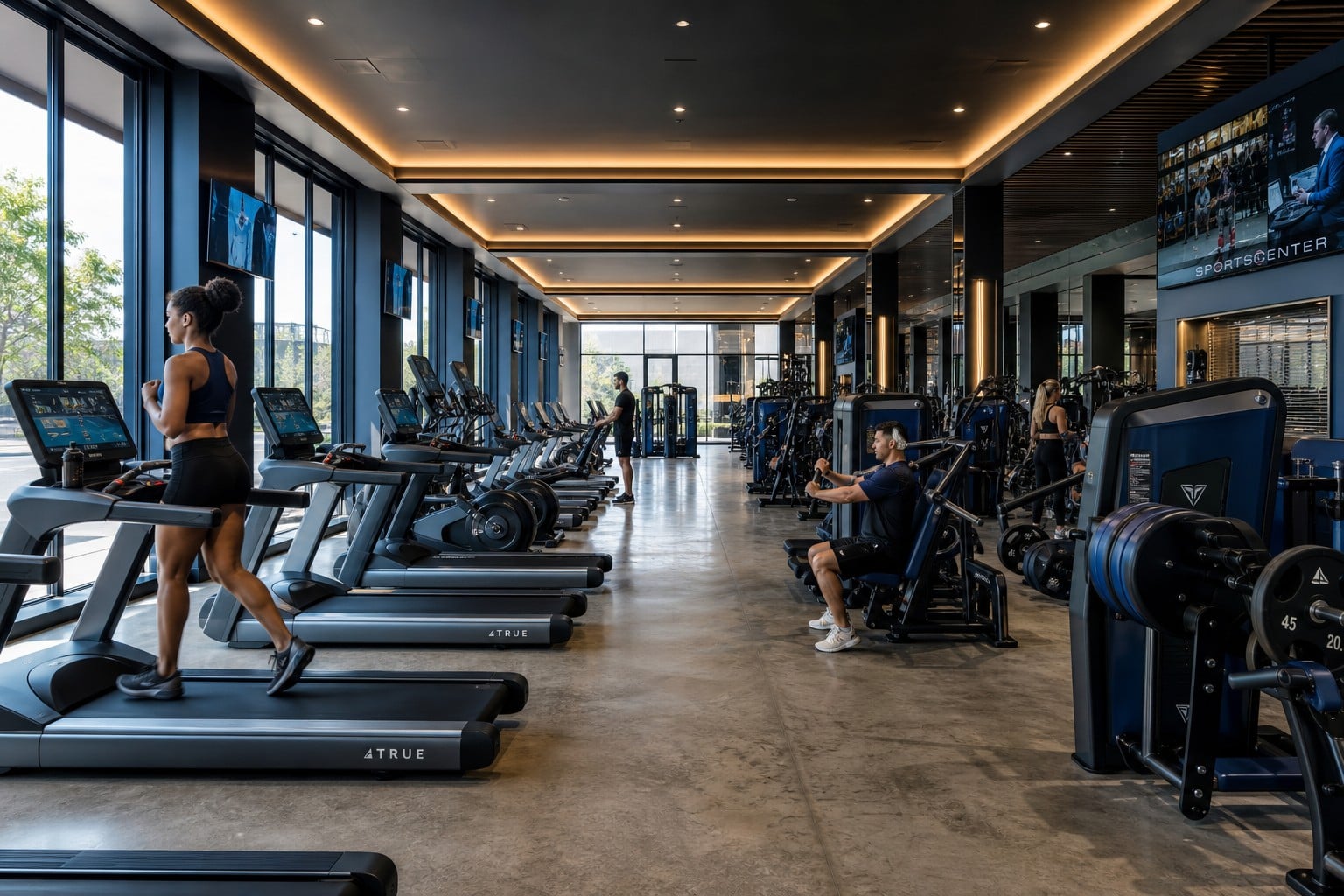
The commercial fitness equipment landscape is shifting faster than ever. From AI-powered machines to surging supply chain costs, gym owners and equipment distributors face a market that demands both strategic foresight and operational agility. This article breaks down the five most impactful trends shaping the commercial gym equipment industry in 2026 — backed by market data and actionable insights for procurement decision-makers.
The 2026 Commercial Fitness Equipment Market at a Glance
The global fitness equipment market reached an estimated USD 19.7 billion in 2025 and is projected to grow to USD 27.4 billion by 2033, at a compound annual growth rate (CAGR) of approximately 3.9% to 5.8%, depending on the segment (Grand View Research, 2026; Persistence Market Research, 2026).
The commercial segment — equipment destined for gyms, hotels, corporate wellness centers, and training facilities — is growing even faster, with some analysts projecting a 10.7% CAGR through 2033 (LinkedIn Market Research, 2026).
The commercial resurgence is fueled by post-pandemic gym membership recovery, corporate wellness expansion, and the mainstreaming of boutique fitness studios across Asia-Pacific, the Middle East, and North America.
Trend 1: Smart and Connected Equipment Is No Longer Optional
In 2026, "smart" has shifted from a premium differentiator to a baseline expectation. Commercial treadmills, ellipticals, and strength machines increasingly ship with integrated touchscreens, cloud-based performance tracking, and API-ready connectivity for third-party fitness apps.
Key developments driving adoption:
- AI-Powered Form Correction: Computer vision systems embedded in strength machines now provide real-time feedback on exercise form, reducing injury risk and improving training efficiency for gym members.
- Adaptive Resistance: Cardio machines with AI-driven resistance adjustment automatically modify workout intensity based on real-time heart rate data — a feature that 62% of surveyed gym operators now consider "important" or "critical" in procurement decisions (GymMaster, May 2026).
- Unified Member Dashboards: Gym management platforms increasingly demand equipment that syncs workout data directly to member profiles, creating a seamless digital experience across machines.
For gym owners evaluating equipment in 2026, prioritizing machines with open API connectivity and touchscreen interfaces ensures compatibility with evolving digital ecosystems.
Trend 2: Strength Training Goes Mainstream in Commercial Settings
Strength training is no longer confined to the free-weight section. The 2026 commercial gym floor reflects a fundamental shift: dedicated strength zones are expanding, and selectorized machines are seeing renewed investment.
The American College of Sports Medicine (ACSM) ranked strength training with free weights as the #2 fitness trend for 2026, reflecting sustained consumer demand for resistance-based workouts. This has three implications for commercial buyers:
- Dual-Function Machines Gain Traction: Equipment that combines guided strength movements with cardio elements — such as functional trainers with integrated rowing or stepping functions — is seeing 15–20% higher adoption in new gym openings compared to 2024.
- Plate-Loaded and Selectorized Lines Diverge: High-end commercial facilities are investing in premium selectorized lines with biomechanically optimized motion paths, while budget-conscious operators favor durable plate-loaded alternatives.
- Compact Multi-Stations for Space Efficiency: Urban gyms with footprint constraints are driving demand for multi-functional strength stations that replace 3–4 standalone machines.
WRM Fitness's Sky Blue High-End Power Series and Downton Brown Premium Power Series are engineered to meet these diverging needs — from premium selectorized units with torsion spring buffer structures to robust plate-loaded configurations.
Trend 3: Commercial Equipment Prices Are Rising — Here Is Why
A critical trend affecting procurement budgets in 2026: commercial gym equipment prices are climbing steadily, with many dealers forecasting an additional 15–20% increase by Q4 2026 (CTX Home Gyms, June 2026).
Three structural factors are driving cost escalation:
- Steel and Component Costs: Global steel prices remain elevated, and specialized components — motors, bearings, electronic control boards — face ongoing supply chain constraints.
- Shipping and Logistics: Container freight rates from Asia to North America and Europe have not returned to pre-2020 levels, adding 150 per unit for large cardio machines.
- Technology Integration Premiums: Touchscreen displays, IoT modules, and AI sensors add 500 to the bill of materials per smart-enabled machine.
How to Mitigate Rising Costs
Sourcing directly from manufacturers with self-operated warehouses near major ports — such as WRM Fitness's facilities at Ningbo Port and Yiwu Port — can significantly compress both equipment costs and delivery lead times.
Trend 4: Sustainability Is Becoming a Procurement Criterion
Environmental considerations are moving from "nice to have" to a genuine factor in commercial equipment evaluation. The International Health, Racquet & Sportsclub Association (IHRSA) noted in its 2026 industry report that 43% of gym operators in Europe and 31% in North America now include sustainability criteria in their equipment RFPs.
Key sustainability dimensions in commercial fitness equipment:
- Energy-Efficient Motors: AC motor-driven treadmills with energy recovery systems can reduce electricity consumption by 18–25% compared to DC motor equivalents.
- Recyclable Frame Materials: Steel frames with high recycled content and powder-coated finishes eliminate solvent-based paint emissions.
- Renewable Energy Manufacturing: A growing number of manufacturers are transitioning production facilities to solar and wind power, reducing the embedded carbon footprint of each unit.
WRM Fitness has embedded sustainability into its manufacturing philosophy under the "Healthy Life, Green Earth" initiative, utilizing renewable energy sources — solar, wind, and hydro — across production processes.
Trend 5: Multi-Modal Training Zones Replace Single-Purpose Layouts
The traditional gym floor plan — cardio here, strength there, stretching in the corner — is being replaced by multi-modal training zones that blend equipment types around functional training outcomes.
This shift favors equipment that is:
- Modular and Reconfigurable: Machines on casters or with compact footprints that allow rapid layout changes
- Multi-Functional: Equipment that serves both cardio and strength purposes, such as functional trainers with integrated walking platforms
- Group-Training Compatible: Multiple identical units that can be arranged in circuits for small-group training sessions
For procurement planners, this means evaluating equipment not just on individual specs but on how it integrates into a zone-based floor plan. Commercial buyers should prioritize manufacturers offering full-category catalogs — cardio, strength, and functional training from a single source — to ensure aesthetic and dimensional consistency across zones.
What This Means for Your 2026 Procurement Strategy
If you are planning a gym equipment purchase or refresh in the second half of 2026, here are three actionable recommendations:
- Prioritize Smart-Ready Over Fully-Loaded: Not every machine needs a 32-inch touchscreen. Invest in smart-enabled cardio equipment for high-traffic zones and mix in solid-state machines for secondary areas to control costs.
- Go Direct to Manufacturer: The traditional distributor markup model is increasingly difficult to justify. Direct sourcing from factories — especially those with export-ready operations and port-adjacent warehousing — can deliver 20–35% cost savings.
-
Plan for Multi-Year Scalability: Choose equipment lines with consistent design languages and modular architectures so future expansions don't create visual or functional mismatches on the gym floor.
FAQ
How fast is the commercial gym equipment market growing in 2026?
The commercial gym equipment segment is projected to grow at approximately 10.7% CAGR through 2033, outpacing the broader fitness equipment market (3.9%–5.8%). Key growth drivers include gym membership recovery, corporate wellness expansion, and the boutique fitness boom.
Why are commercial gym equipment prices rising in 2026?
Three main factors: elevated steel and component costs, persistently high container freight rates from Asia, and the added bill-of-materials cost of smart technology integration (touchscreens, IoT modules, AI sensors). Many dealers project an additional 15–20% price increase by Q4 2026.
What should gym owners prioritize when buying commercial equipment in 2026?
Focus on three areas: (1) smart connectivity features with open APIs, (2) direct manufacturer sourcing to bypass distributor markups, and (3) full-category suppliers that offer consistent design across cardio, strength, and functional training zones.
Is sustainability really a factor in commercial equipment procurement?
Yes. IHRSA's 2026 report indicates 43% of European and 31% of North American gym operators now include sustainability criteria in equipment RFPs. Energy-efficient motors, recyclable materials, and renewable-energy manufacturing are the top three criteria cited.
How can I reduce commercial equipment procurement costs?
The most effective strategies include sourcing directly from manufacturers (20–35% savings), placing container-load bulk orders (10–15% freight savings), locking in Q3 pricing before Q4 surges, and using a hybrid smart/basic equipment mix to optimize budget allocation.
About WRM Fitness: WRM Fitness Equipment Co., Ltd. is a leading global fitness equipment manufacturer established in 2004. Headquartered in Yiwu, Zhejiang — adjacent to Ningbo Port — we offer a full catalog of commercial treadmills, ellipticals, exercise bikes, strength training machines, and functional trainers. With an 800 m² showroom, self-operated export warehouses, and a "Healthy Life, Green Earth" manufacturing philosophy, we help gym owners and distributors worldwide build competitive, future-proof facilities. Contact us for a tailored procurement solution.
Table of Contents
- The 2026 Commercial Fitness Equipment Market at a Glance
- Trend 1: Smart and Connected Equipment Is No Longer Optional
- Trend 2: Strength Training Goes Mainstream in Commercial Settings
- Trend 3: Commercial Equipment Prices Are Rising — Here Is Why
- Trend 4: Sustainability Is Becoming a Procurement Criterion
- Trend 5: Multi-Modal Training Zones Replace Single-Purpose Layouts
- What This Means for Your 2026 Procurement Strategy
-
FAQ
- How fast is the commercial gym equipment market growing in 2026?
- Why are commercial gym equipment prices rising in 2026?
- What should gym owners prioritize when buying commercial equipment in 2026?
- Is sustainability really a factor in commercial equipment procurement?
- How can I reduce commercial equipment procurement costs?