
 EN
EN
 AR
AR
 BG
BG
 HR
HR
 CS
CS
 DA
DA
 NL
NL
 FI
FI
 FR
FR
 DE
DE
 EL
EL
 HI
HI
 IT
IT
 JA
JA
 KO
KO
 PL
PL
 PT
PT
 RO
RO
 RU
RU
 ES
ES
 SV
SV
 ID
ID
 UK
UK
 ET
ET
 GL
GL
 HU
HU
 MT
MT
 TR
TR
 FA
FA
 AF
AF
 GA
GA
 HY
HY
 AZ
AZ
 KA
KA
 UR
UR
 BN
BN
 LA
LA
 UZ
UZ
 KU
KU
 KY
KY
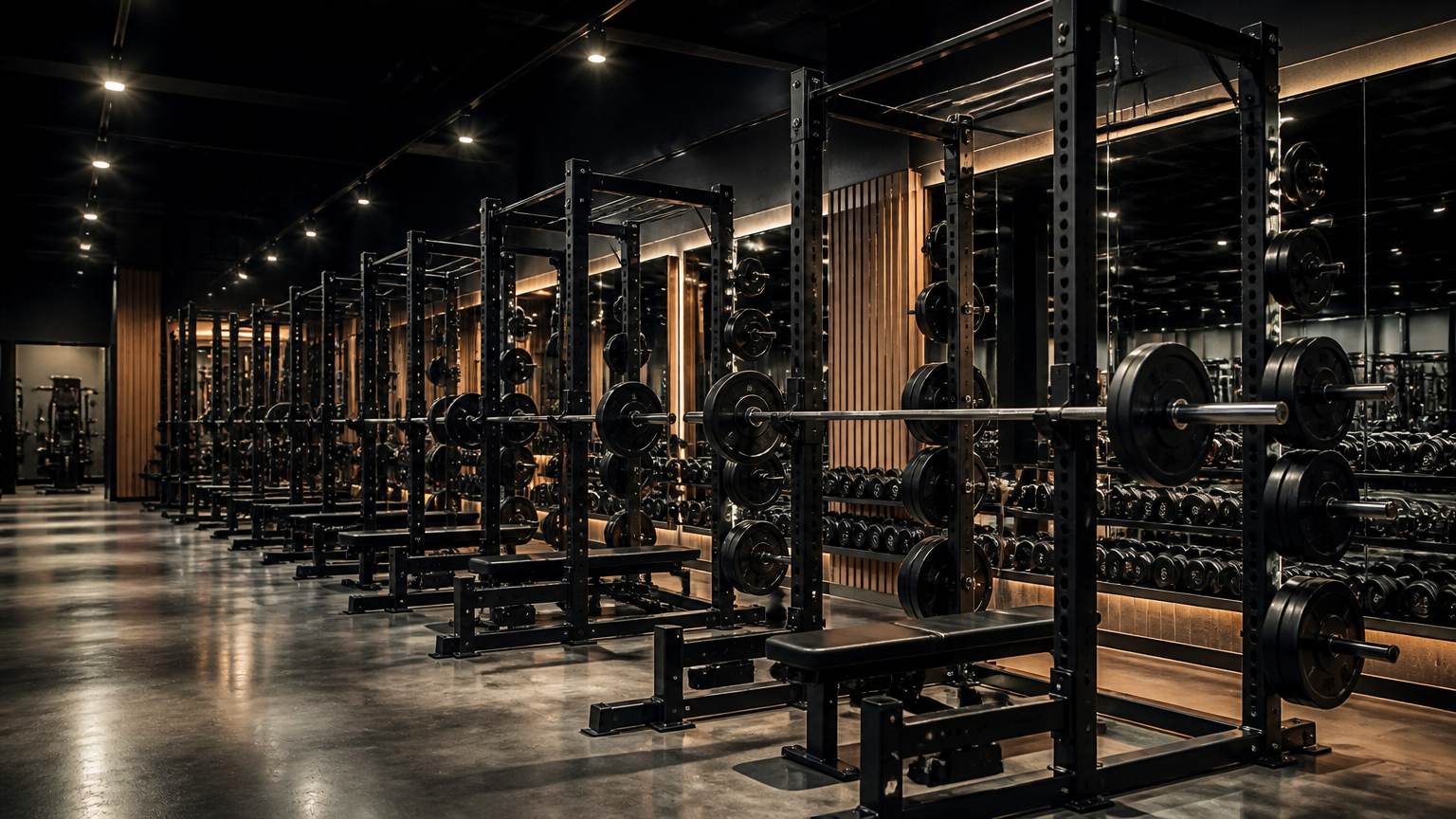
Die aankoop van kommersiële gimnasiumtoerusting is een van die grootste kapitaalbesluite wat 'n gimnasium-eienaar sal neem. 'n Enkele kragmasjien kan meer as 500 werksessies per jaar ondersteun, en in 'n besige fasiliteit gaan "goed genoeg" huistoerusting binne maande — nie jare nie.
Die probleem? Die meeste koopmense vergelyk net foto's en pryskaartjies, nie ingenieurswerk nie. Twee masjiene kan identies lyk maar verskil met drie keer in leeftyd vanweë wat jy nie kan sien nie: staaldikte, lasgehalte, lagerklassifikasies en sertifisering.
Hierdie gids breek die 7 harde spesifikasies u moet verifieer voordat u enige kommersiële fiksheidstoestel-kooporder teken — plus die rooi waarskuwingstekens wat goedkope invoere blootlê.
Kommersiële kragtoestelle is ontwerp vir duisende werksessies per jaar.
1. Hoekom "Kommersiële Graad" Werklik Belangrik Is
Kommersiële toestelle is ontwerp vir 'n ander diensiklus as huistoestelle:
Wanneer 'n toestel daagliks deur tientalle lede gebruik word, word elke komponent voortdurend belas. Dit is hoekom Europese en Amerikaanse kommersiële fasiliteite slegs toerusting koop wat aan spesifieke ingenieursstandaarde gecertifiseer is — die aanvanklike kosteprys word baie keer terugbetaal in verminderde afstelling en herstelkoste.
2. Die 7 Harde Spesifikasies om te Verifieer Voordat Jy Koop
2.1 Staal Dikte (Raam Maat)
Die een belangrikste spesifikasie. Goedkoop raams gebruik 1,5–2,0 mm staal wat buig onder las en moegheidsskeur vorm. Kommersiële-graad raams moet wees:
- Sterkte raams (rekkers, Smith masjiene): minimum 3,0 mm, ideaal 3,5–4,0 mm strukturele staal
- Banke en masjien arms: 2,5–3,0 mm
- Toetsstandaard: raam moet 2x die nominaal belasting dra sonder sigbare vervorming
Soek na volledige deurdringende robotlasverbindings en 'n minimum raamdikte van 3,0 mm vir kragtoestelle.
Vra die verskaffer: "Wat is die presiese staaldikte en -graad? Kan jy 'n las-toetsvideo wys?"
2.2 EN957 / ISO-sertifikasie
Hierdie is nie onderhandelbaar vir kommerciële kopers nie:
- EN957 is die Europese norm vir stationêre oefentoestelle en dek veiligheid, krag- en duurzaamheidstoetse (EN957-1 algemene vereistes, EN957-2 kragtoestelle)
- ISO 20957 is die internasionale ekwivalent
- EN ISO 20957 is die gekombineerde geharmoniseerde standaard onder die EU-masjinerie- riglyn
Gesertifiseerde toerusting het die volgende suksesvol deurgeloop duurtoetse (tipies 10 000+ siklusse) en strukturele belastingtoetse in onafhanklike laboratoriums. Nie-gesertifiseerde toerusting mag nie wettig in baie EU-markte verkoop word nie, en die meeste versekeringspolisse vir kommersiële gimnasiums vereis dit.
2.3 Lager- en katrolwaardes
Bewegende dele gaan eerste stil staan. Bevestig:
- Aslag: geëgte kommersiële lagers (nie bushings nie) op alle swaai-punte; gewaardeer vir aanhoudende belasting
- Katrolle: nikkel-versterkte of staalkatrolle met geëgte kogellagers, gewaardeer vir die kabel se werkbelasting
- Kabelle: 7x19 galvaniseerde lugvaartkabel (nie plastiek-omhul nie), gewaardeer vir herhaalde belastings van 200 kg of meer
2.4 Lasgehalte & Poedervormige Laag
Twee masjiene met dieselfde staaldikte kan baie verskil in volhoubaarheid:
- Lasverbindings: volledige deurdringingslasverbindings, masjien-gelas waar moontlik (robotiese laswerk = konsekwente gehalte), glad geslyp by spanningpunte
- Verf: elektrostatiese poedervormige laag (nie spuitverf nie) — minimum 60–80 µm dikte om krabbe en roes in hoë-lugvochtigheidsoefengimnasiums te weerstaan
2.5 Gewigstapel & skyfverenigbaarheid
- Gewigstapels: 5 mm inkrement-skywe, geleiding met verchroomde of nylon-gevoerde stawe om versletenheid en geraas te voorkom
- Skyf-gelaai stasies: Olimpiese 50 mm buisies (of 1-duim vir ligter reekse) — bevestig dat die buisie-lengte pas by jou bestaande skyfvoorraad
- Kompatibiliteit: gestandaardiseerde gat-afstand (bv. 1-duim Westside-afstand op rakke) laat jou toe om aansluitstukke van verskeie handelsmerke te meng — ’n werklike koste-bespaarder
2.6 Bekleding en skuimdigtheid
Die eerste ding wat lede opmerk, en die gouste ding wat verslet:
- Skuim: hoëdigtheid (40+ kg/m³) geslote-sel-skuim; goedkope masjiene gebruik 25 kg/m³-skuim wat binne ’n jaar plat word
- Viniel: kommersiële graad 0.9–1.2 mm viniel, antimikrobies, naad-glasgelas (nie genaai nie) om skeuring te voorkom
- Onderstutting: plywood-ondersteunde (nie skyfplaat nie) sitplekke
2.7 Waarborge en beskikbaarheid van onderdele
Kommersiële toerusting is ’n 10-jaar-verhouding , nie 'n eenmalige aankoop nie:
Krities: verseker dat verslae vir onderdele vir 7–10 jaar na aankoop beskikbaar bly chinese fabrieke met 'n sterk OEM/ODM-agtergrond (soos WRM) kan langtermyn onderdeelvoorsiening waarborg omdat hulle die vervaardigingslyn direk beheer — iets wat handelaars dikwels nie kan belowe nie.
3. Rooi waarskuwingstekens: Hoe goedkoop invoere hulself blootstel
Let op hierdie tekens tydens evaluering:
- Geen sertifikasiedokumente nie — verskaffer kan nie EN957/ISO-sertifikate of toetsverslae voorsien nie
- Vagte spesifikasieblaaie — "hoë-kwaliteitstaal" sonder dikte, graad of lasbeperkings
- Slegs voorraadfoto's — geen werklike fabriekvideo's, geen las-toetsvideo's, geen rondleiding
- Geen naverkoopstruktuur nie — geen onderdeelkatalogus nie, geen installasiemanuele nie, stadige e-posreaksie
- "Kommersieel" gestempel op huishoudelike produkte — 'n bemarkingswoord, nie 'n ingenieursklassifikasie nie
4. Hoe om 'n vervaardiger te verifieer (fabriekouditkontrolelys)
Voordat jy 'n groot bestelling plaas, doen hierdie 5-puntkontrole:
’n Fabriekoudit moet ’n lewendige of opgeneemde rondleiding van die las- en kwaliteitsbeheerlyn insluit.
- Vra vir werklike produksievideo's — lasslyn, montering, kwaliteitsbeheer, belastingtoetse
- Vra vir onafhanklike toetsverslae — EN957 / ISO 20957 laboratoriumverslae, nie net sertifikate nie
- Kontroleer hul uitvoer geskiedenis — watter lande, watter kommersiële projekte
- Vra vir verwysingsgimnasiums — vra vir 3–5 geïnstalleerde kommersiële gimnasiums waarmee jy kan kontak maak
- Toets die ondersteuningspan — stuur ’n tegniese vraag en meet reaktietyd en diepte
5. VVA (Vrae wat dikwels gestel word)
V: Is EN957 dieselfde as ISO 20957? A: Hulle dek dieselfde omvang. EN957 is die Europese streekstandaard; ISO 20957 is die internasionale weergawe. Die gekombineerde standaard word aangehaal as EN ISO 20957.
V: Watter staaldikte het ek werklik nodig vir ’n squat-rak in ’n kommersiële gimnasium? A: Minimum 3,0 mm vir die hoofoprigte; 3,5–4,0 mm word verkies vir fasiliteite met swaar gebruik. Enigiets onder 2,5 mm is vir huishoudelike gebruik.
V: Kan ek toerusting van verskillende vervaardigers meng? A: Ja, indien gat-afstande en buisdeursnitte volgens standaardgroottes is (bv. 50 mm Olimpiese busse, Westside-rak-afstande). Bevestig verenigbaarheid voor koop.
V: Hoekom bied sommige Chinese vervaardigers baie laer pryse aan? A: Omdat hulle die fabriek is. Wanneer jy direk vanaf die fabriek koop, verwyder jy verspreiderwins (tipies 30–40%) — maar jy moet ingenieurspesifikasies en sertifiseringsstrengheid noukeurig verifieer, soos hierdie gids verduidelik.
Gevolgtrekking: Koop die spesifikasie, nie die foto nie
Die goedkoopste masjien is selde die beste transaksie, en die duurste is selde nodig. Kommersiële gimnasiumtoerusting moet gekies word op ingenieurspesifikasies — staaldikte, EN957-sertifisering, kwaliteit van lagers en lengte van die waarborg — omdat hierdie spesifikasies jou gimnasium se afbreektyd, herstelkoste en lidervaring vir die volgende dekade bepaal.
WRM Fitness vervaardig kommersiële kragtoerusting sedert 20 jaar en bied die volgende aan:
- EN957-getoetste raamwerke met strukturele staal van 3,0 mm of dikker
- Fabriekdirekte pryse (geen verspreideropslag nie)
- Langtermynversekering vir vervangstukke
- Gratis 3D-gimnasiumontwerpdiens om jou uitleg te beplan voordat jy koop
Tabel van inhoud
- 1. Hoekom "Kommersiële Graad" Werklik Belangrik Is
- 2. Die 7 Harde Spesifikasies om te Verifieer Voordat Jy Koop
- 3. Rooi waarskuwingstekens: Hoe goedkoop invoere hulself blootstel
- 4. Hoe om 'n vervaardiger te verifieer (fabriekouditkontrolelys)
- 5. VVA (Vrae wat dikwels gestel word)
- Gevolgtrekking: Koop die spesifikasie, nie die foto nie